Brand differentiation
A walk-in humidor or a glass-walled wine cellar are amenities that very few properties in the segment offer. They feature in architecture publications, in social reels and in reviews, and guests remember them.
Over 35 years building bespoke climate-controlled humidors and wine cellars for luxury hotels, restaurants and private residences. From Hotel Arts Barcelona to Hesperia Tower, including a commission from Toyō Itō's studio. One technical contact: Juan Serrate, designer and cellar technician.
Fill in your details and we will call you within 24 working hours to arrange the technical visit. Space survey and fixed-price quote, with no commitment.
A walk-in humidor or a glass-walled wine cellar are amenities that very few properties in the segment offer. They feature in architecture publications, in social reels and in reviews, and guests remember them.
A cigar list with a visible humidor or a wine wall with guided pairing raises average ticket. For 5-star hotels and starred restaurants, these are margin centres, not decoration.
Singular pieces draw architecture and hospitality press. For your studio it means a stronger portfolio; for the end client, long-term brand value.
From €70,000
From €75,000
From €85,000
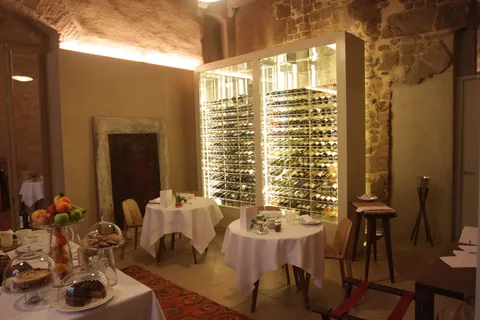
From €50,000
From €40,000
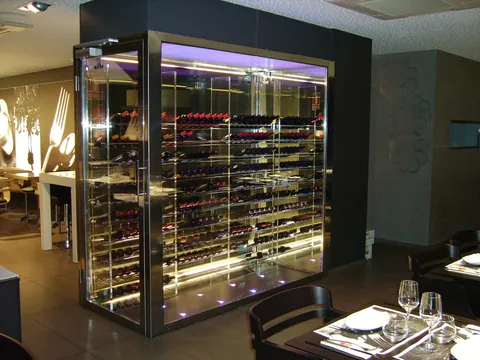
From €56,000
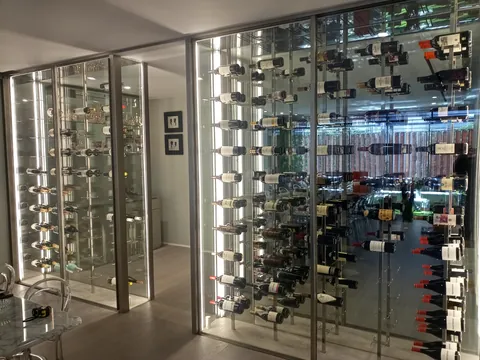
From €125,000
Indicative prices, VAT not included. Lead time depends on the project and is agreed at the technical visit. Service across mainland Spain and the Balearic Islands: the workshop is in Barcelona, so projects outside the city add transport and installation travel, quoted separately.
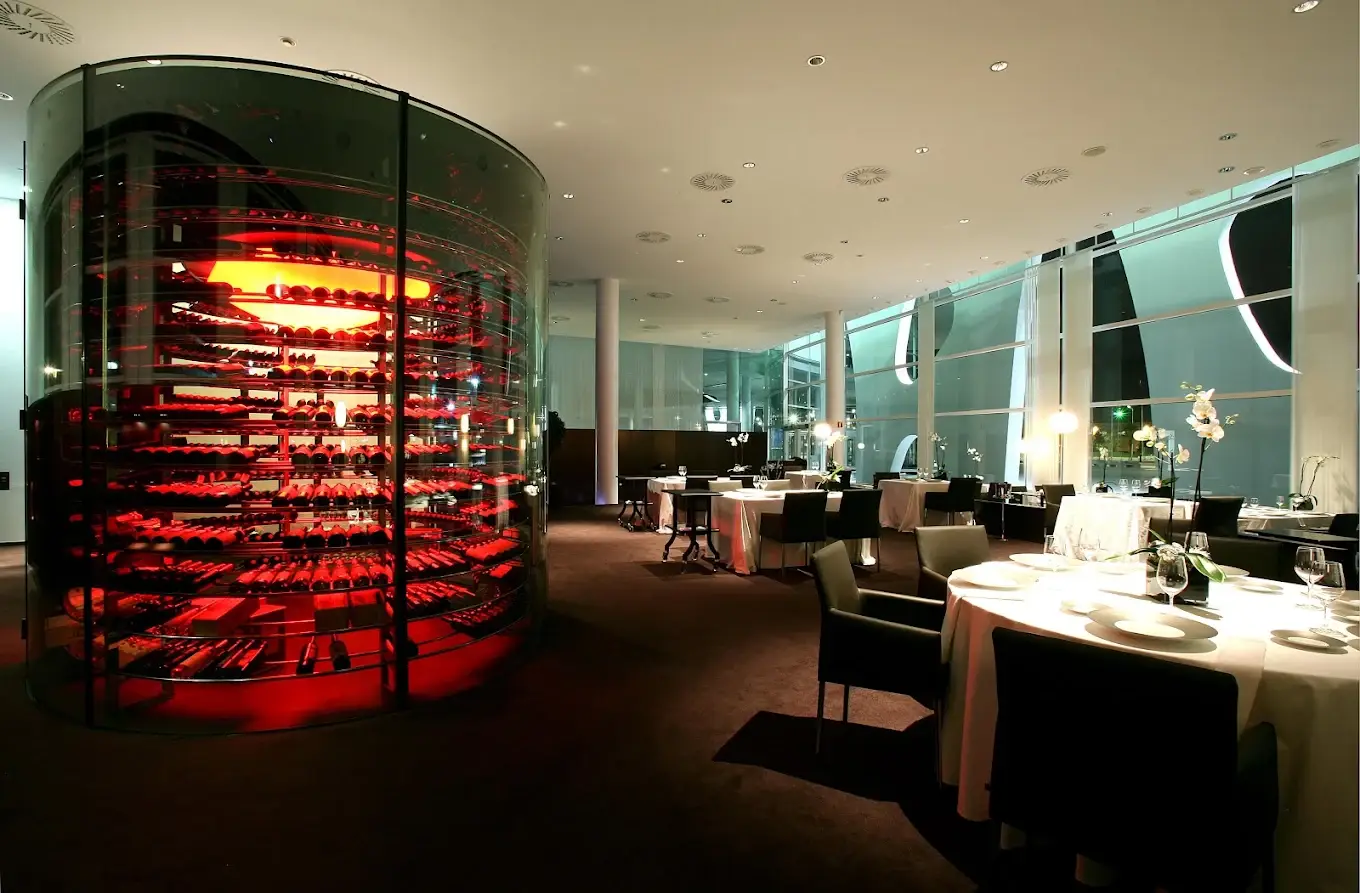
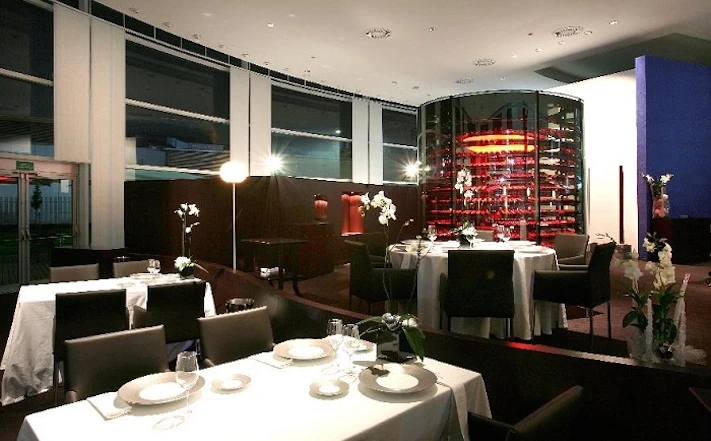
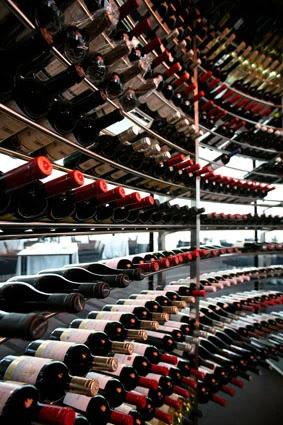
A glass cylinder with dramatic interior lighting. Toyō Itō's studio (Pritzker 2013) signed the design; we resolved the engineering: curved enclosure, integrated climate control, UV-free lighting and an anti-vibration system.
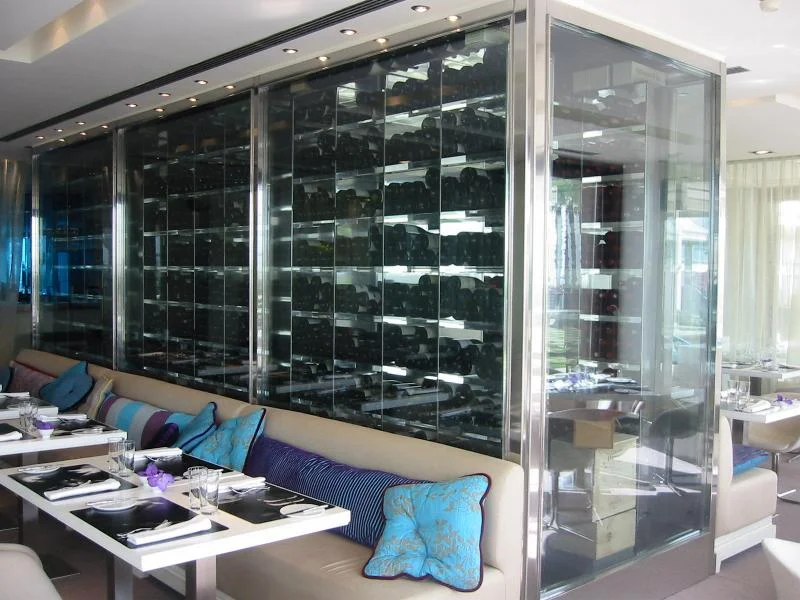
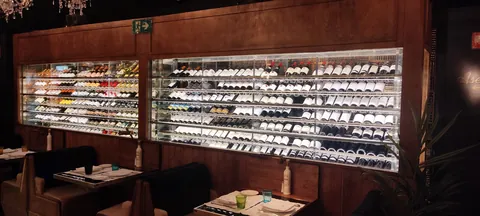
Glass wall integrated into the dining room, stainless steel frame and large-format tempered glass. Full visibility of the collection from the table.
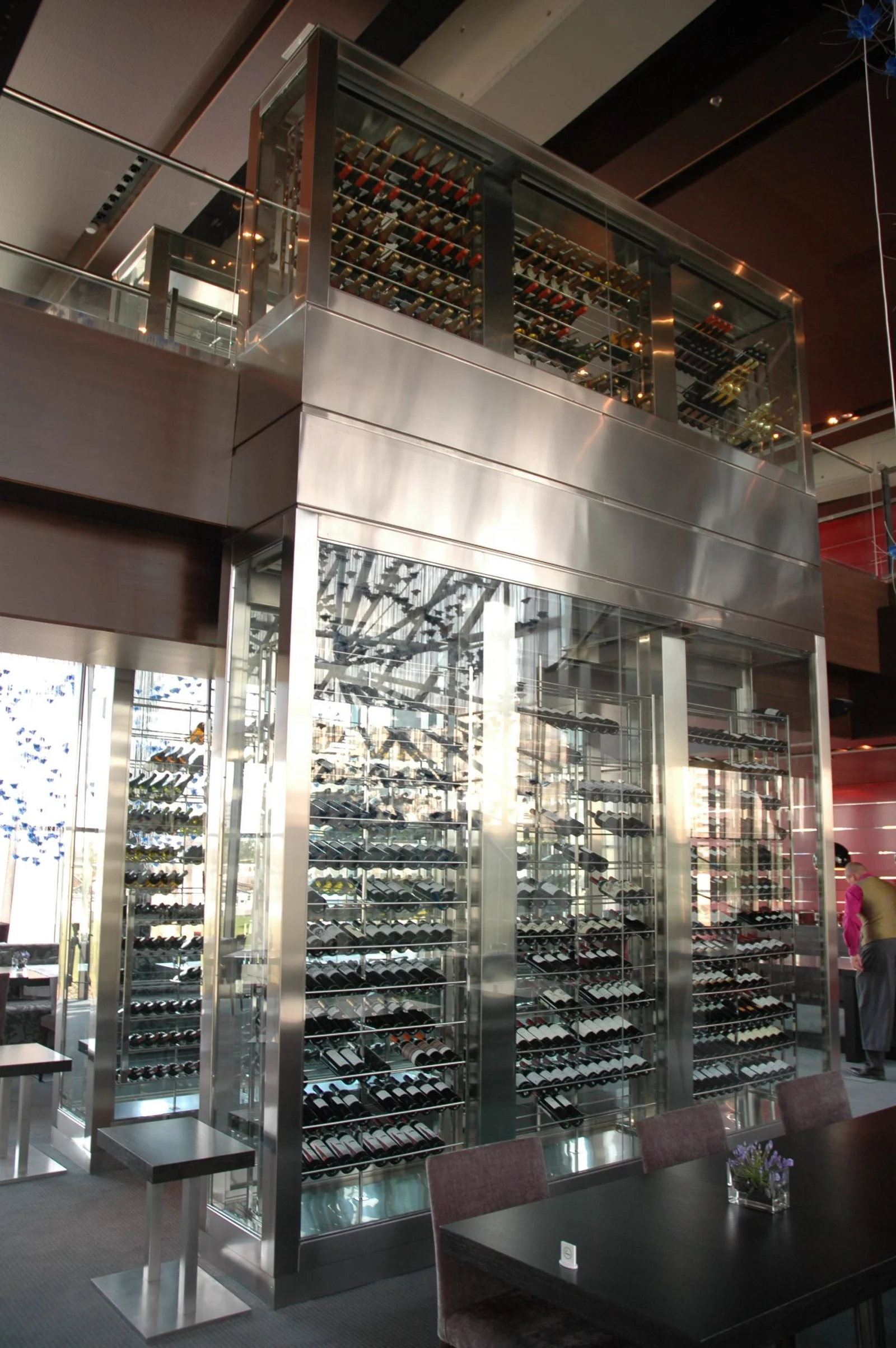
Double-height glass tower as the central architectural element of the room. Light steel structure with independent technical access.
The rest of our cases are under NDA. Get in touch and we'll share an extended private dossier.
We work with your studio from concept design. You shape the space; we resolve everything related to conservation, technical integration and the final piece.
You speak with Juan Serrate, not with a salesperson. We work from your drawings (DWG, IFC/BIM), propose construction details and resolve site queries.
Temperature control 14°C ±0.5°C, humidity 60–70% by typology, sized ventilation, zero condensation, integration with project building services.
Cedar (Cedrela odorata) for humidors, French oak, walnut or ash for wine cellars. Low-emissivity glass. Stainless steel and corten. Finishes matching your material palette.
Dramatic UV-free lighting, controlled acoustics, ventilation that doesn't conflict with HVAC, concealed technical access, front cladding coordinated with the interior design.
Joinery, glazing and metalwork in our Barcelona workshop. Full control of quality and timelines. Pre-assembled in workshop before transport to site.
Turnkey installation, climate commissioning, training for floor staff/maître and optional annual maintenance contract.
Meeting (in person or video) with your team. Available space, target capacity, project materials, deadlines, indicative budget. 60 min.
Within 7-15 days: detailed technical proposal, material options, photorealistic 3D render, fixed quote and schedule. Review and adjustments.
Production in our Barcelona workshop. We share progress with your studio. Full pre-assembly before leaving the workshop.
Transport and installation coordinated with your build. Climate commissioning. Staff training. Technical documentation + maintenance manual.
24-page PDF for architects and interior designers: minimum dimensions, climate and ventilation requirements, HVAC integration, acoustics, lighting, applicable regulations and a concept-design checklist.
We send it to your professional email. No newsletter, no lists: this resource is for architects and interior designers only.
For architecture and interior design studios and hotel groups. If you can share floor plan, project phase and deadline, even better, we go straight to the technical detail in the first call.
Photorealistic 3D renders in the project materials palette, CAD plans in DWG format, IFC/BIM files, a signed technical memorandum covering climate engineering, electrical requirements, plumbing connections and structural loads, and a construction detail package for the interface with adjacent finishes.
Glass wine room: minimum 800 mm depth, 1,200 mm+ width, 2,200 mm ceiling clearance. Built-in kitchen cabinet: 600–900 mm depth from 600 mm width. Underground cellar: from 6 m² (1,000 bottles) to 40–50 m² (8,000 bottles + tasting area). Walk-in humidor: minimum 6 m² for 2,000 cigars, with 300 mm cedar lining on all faces.
Wine cellars and humidors use independent climate systems to prevent aroma contamination. We coordinate with the MEP engineer to allocate condensing unit location, refrigerant pipe routes (concealed in technical risers), makeup air connections and electrical supply sizing. Full load calculations are included in the technical memorandum.
Yes. We work with: French oak, American walnut, cedar, ash, iroko, exotic woods, corten steel (any oxidation stage), AISI 304 or 316 stainless steel, natural stone (travertine, slate, terracotta), microcement, tadelakt and glass in any transparency, emissivity and UV-filter specification.
The compressor must not exceed 35 dB inside the cellar. For hospitality projects we specify remote condensing units in technical rooms, connected via decoupled refrigerant piping. Humidor cigar lounge extraction hoods are designed to stay below 55 dB at 1 m from the seating area.
Full KNX, Loxone, Crestron and Control4 integration. Temperature and humidity are exposed as data points to the BMS. Thermal deviation alarms are forwarded to the engineering team. Lighting scenes are triggerable from the BMS panel or guest room controls.
Verified references: wine cellar at Hotel Arts Barcelona (glass wall, stainless steel frame, large-format tempered glass), double-height glass wine tower at Hesperia Tower (+1,500 bottles), and a sculptural cylindrical humidor commissioned by Toyō Itō's studio (Pritzker 2013). Extended NDA-covered portfolio available on request.
Technical briefing: 1 week. Proposal with 3D render: 7–15 days. Workshop fabrication: 8–16 weeks. On-site installation and commissioning: 5–14 days. For hotel projects with hard opening deadlines, allow a minimum of 20 weeks from first briefing to commissioned delivery.
Involve L'Humidor from concept design. Early involvement eliminates costly late changes to structural, MEP and aesthetic integration. Joan Serrate is the single technical contact: no salespeople, no subcontractors for design or fabrication. In-house Barcelona workshop means full quality control and a single accountability point.
UV-free LED 2,700 K with scene programming: ambient (low intensity, warm tone), tasting (focal spotlights on selected labels), service (functional uniform illumination) and nocturnal absence. All dimmable per zone via touch panel or BMS. Maximum 200 lux on bottle surfaces to prevent light-strike.
Yes. A 24-page technical PDF covering minimum dimensions by capacity, climate and ventilation requirements, HVAC integration, acoustic specifications, lighting design, applicable regulations and a concept-design checklist. Available at no cost on request to Joan Serrate directly.
Every cellar, cabinet or humidor is designed from scratch around your space. Write or call and we'll arrange a technical visit to study your case. No middlemen. No commitment.